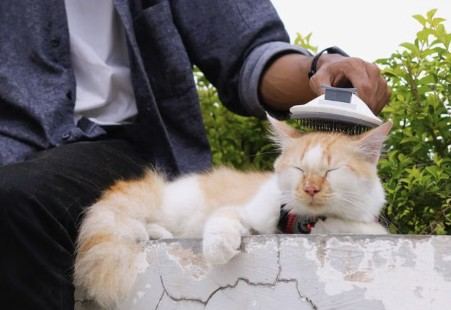
Not all cat brushes do the same job. Here's a breakdown of the main types and when to use each.
Deshedding Tools
The FURminator is the category leader — a stainless steel comb that reaches through the topcoat to remove dead undercoat before it ends up on your furniture. Used weekly, it can noticeably cut down on loose hair — the manufacturer claims up to 90% less shedding, though results vary by coat. Don't overuse it: 10–15 minutes once or twice a week is plenty. Overuse can thin the topcoat.
Slicker Brushes
Fine bent wire pins that penetrate the coat to remove loose fur and prevent tangles. Good for daily maintenance on medium to long-haired cats. Look for a self-cleaning version (button-retract) to make cleanup easier. The Hertzko self-cleaning slicker is a popular, well-reviewed option in this style.
Rubber/Silicone Grooming Mitts
The secret weapon for cats that resist brushes. Cats experience the silicone nubs as petting. Effective for short-haired breeds and as a first step for cats being introduced to grooming. Less effective than a slicker on long-haired cats with thick undercoats.
Wide-Tooth Combs
Essential for long-haired cats before brushing. Run through the coat to find and gently work out tangles before the brush catches them. A dual-sided comb (wide and fine tooth) covers all coat conditions in one tool.
Grooming Wipes
Between-brush maintenance for cats that resist handling. Pet-safe grooming wipes remove surface dander and light dirt without water. Particularly useful for Sphynx cats between baths.